
 Facebook
 X
X
 Pinterest
 Copy Link
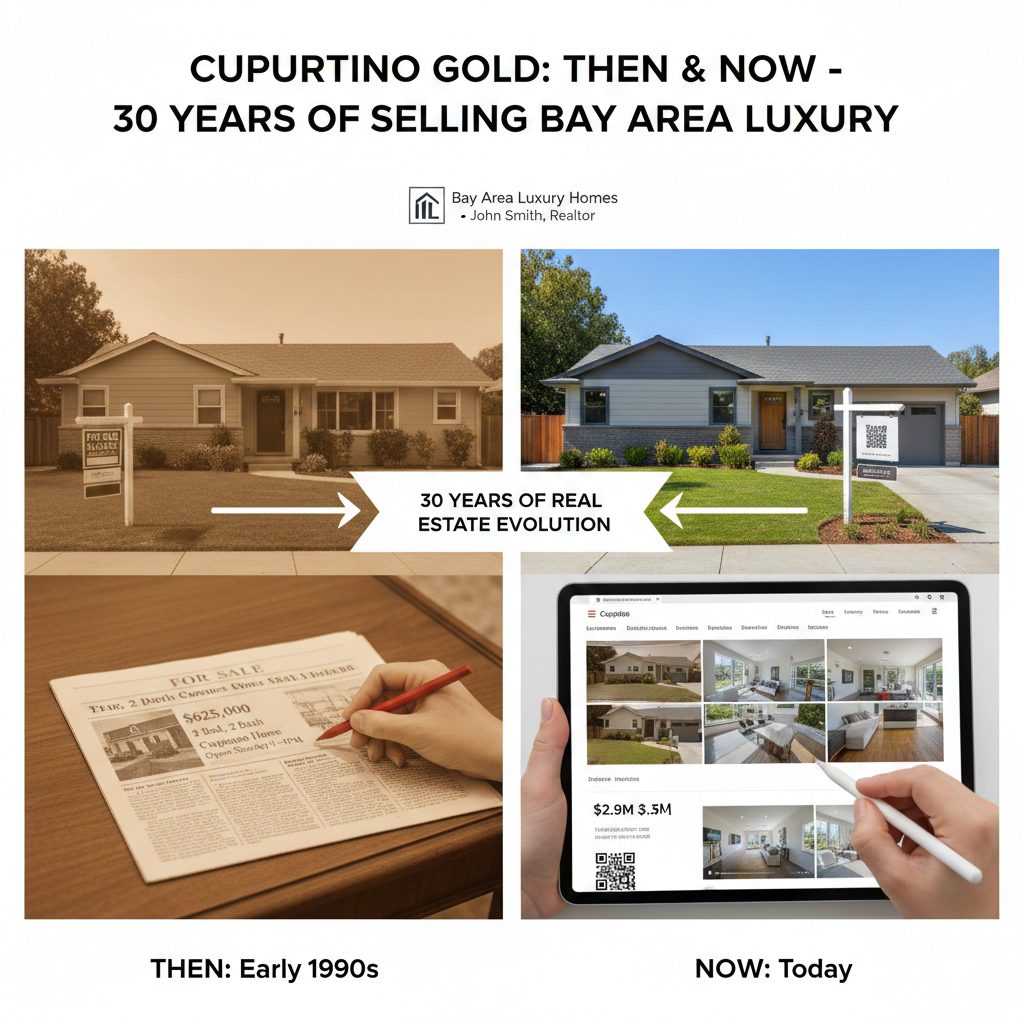
How Selling a Cupertino Home Has Changed Over the Last 30 Years
Over the last 30 years, owning a home in Cupertino has evolved from a mostly local, relationship-driven experience into a high-stakes, data-driven transaction shaped by global buyers and digital-first marketing. What many long-time homeowners remember from the 1990s—simple listings, limited exposure, and informal preparation—has been replaced by a far more professional, visual, and analytical selling process.
Today, selling a Cupertino home is less about “putting a sign in the yard” and more about executing a coordinated strategy that blends pricing accuracy, buyer psychology, and technology.
From $500,000 Homes to Multi-Million-Dollar Assets
In the mid-1990s, a typical single-family home in Cupertino often sold in the $400,000 to $600,000 range, with many transactions clustering around $500,000 in desirable neighborhoods.
Today, the typical Cupertino single-family home value sits just under $3 million, with recent median sale prices frequently landing in the low-to-mid $3 million range depending on school district, lot size, and condition.
Over a 30-year period, that represents roughly a five- to six-times increase in value for many long-term owners. For most homeowners, what began as a primary residence has quietly become a major component of household net worth and long-term financial planning.
How Buyers Have Changed
In the 1990s, Cupertino buyers were largely local or regional. They discovered homes through newspaper listings, MLS books, or yard signs and relied heavily on their agent for neighborhood context, school information, and pricing guidance.
Today’s buyers arrive far more prepared—and far more global. Tech professionals routinely compare Cupertino with other Bay Area sub-markets online, review school performance data, analyze price-per-square-foot trends, and track days on market before scheduling a showing.
This shift means qualified buyers move quickly when the right home appears, but they also expect comprehensive disclosure packages, professional presentation, and clear data supporting the asking price.
How Marketing a Home Has Evolved
Thirty years ago, home marketing focused on printed MLS books, newspaper ads, basic flyers, and occasional postcards. Photography was limited, and visual storytelling was secondary.
Today, marketing is digital-first. High-quality photography, floor plans, video tours, neighborhood visuals, and targeted social media campaigns are standard in competitive Silicon Valley markets.
AI-assisted tools, including virtual staging, now enable sellers to present multiple design styles for the same space, helping buyers visualize possibilities while accelerating engagement and reducing time-to-market.
The Rise of Preparation and Presentation
In the 1990s, many homes were sold “as-is,” with minimal cosmetic work beyond cleaning, painting, or carpet replacement. Professional staging was uncommon outside higher-end listings.
Today, strategic pre-sale preparation, repairs, light remodeling, landscaping, and either physical or virtual staging can materially influence buyer perception, online engagement, and final sale price.
In a market like Cupertino, where most buyers first encounter a home on a phone screen, thoughtful preparation has shifted from optional to essential for maximizing returns.
What This Means for Long-Term Cupertino Owners
For homeowners who purchased in the 1990s or early 2000s, appreciation has likely been substantial. However, selling today involves more complexity, higher buyer expectations, and greater scrutiny than when they originally bought.
A modern Cupertino sale typically includes data-driven pricing, detailed inspection and disclosure packages, and a coordinated marketing plan that blends traditional exposure with AI-enhanced digital targeting.
If you purchased your Cupertino home decades ago, today’s selling environment may feel unfamiliar. Pricing strategies, buyer expectations, and marketing tools have all evolved. Before making any decisions, a brief planning conversation with Ramesh Rao, your Cupertino Agent, can help translate these market changes into a clear, low-stress strategy tailored to your home, neighborhood, and timeline, whether you plan to sell soon or simply want clarity.

